The 24-Month Window: Why Boston's Conversion Opportunity Won't Last
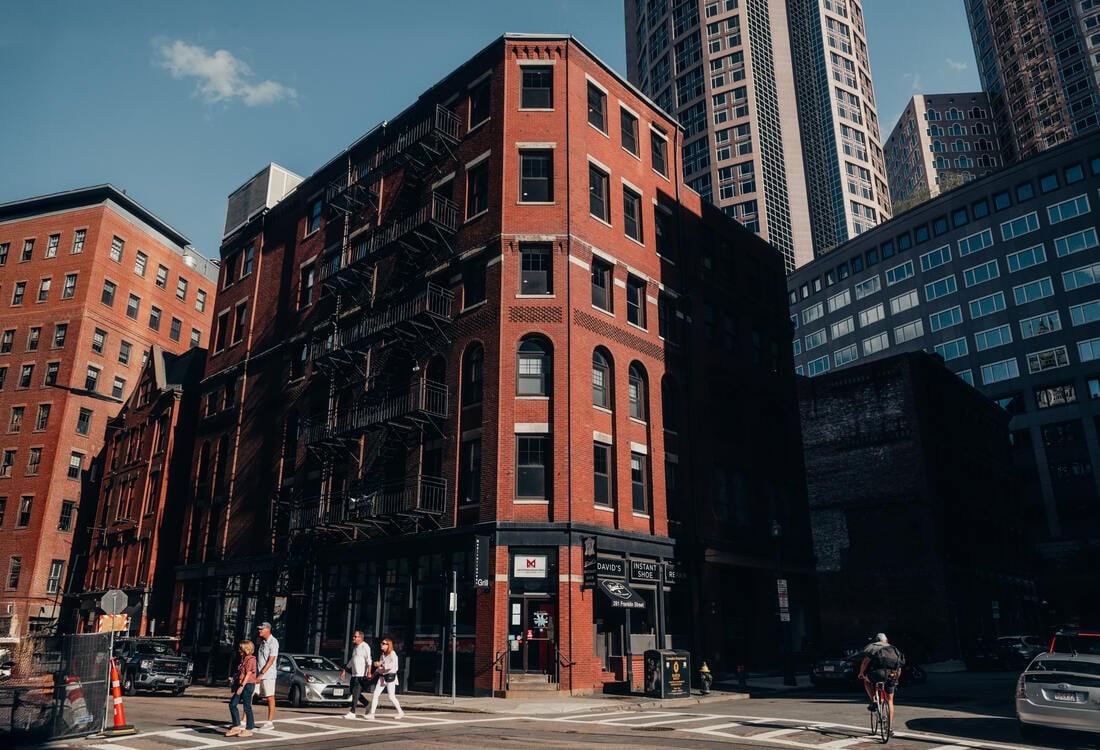
Boston's office-to-residential conversion opportunity has a shelf life. Here's why developers have 24 months to act before the market fundamentals shift.
Boston's office vacancy crisis feels permanent, but the conversion opportunity it created is anything but. While developers debate whether downtown towers are worth saving, the most actionable window for adaptive reuse is already closing.
The Boston office conversion timeline isn't measured in decades of gradual decline—it's measured in the 24 months between market recognition and capital saturation. Balance Architects delivered the city's first permitted office-to-residential conversion when others were still studying feasibility reports. Now, as the rest of the market catches up, the dynamics that made early conversions profitable are shifting quickly.
The Convergence That Created This Window
Three market forces aligned to create Boston's adaptive reuse market opportunity: regulatory flexibility, capital availability, and asset pricing dislocation. None of these conditions are permanent.
Regulatory momentum accelerated. The City of Boston fast-tracked zoning changes that had been stalled for years. MHC guidelines for historic conversions became more predictable. Parking requirements shifted to match post-pandemic transportation patterns. But regulatory windows close as quickly as they open—especially when community opposition mobilizes or new administrations shift priorities.
Capital discovered adaptive reuse. Institutional investors who had ignored conversion projects for decades suddenly saw them as portfolio diversification. Development capital that couldn't pencil new construction found compelling returns in repositioning existing assets. But as more capital chases the same deals, cap rates compress and acquisition premiums eliminate conversion economics.
Asset pricing created arbitrage. Office buildings traded below replacement cost while residential demand pushed rents to record levels. The spread between acquisition cost and stabilized value was wide enough to absorb conversion expenses. That spread is narrowing as office values find a floor and residential markets show early signs of saturation.
Why 24 Months Matters for Boston Development Timing
The office to residential conversion window operates on a specific timeline that balances opportunity recognition with market saturation. Balance Architects tracks this cycle across three phases:
Months 1-8: Pioneer Phase
Early movers secure the best assets at the lowest basis. Regulatory precedents get established. Construction costs remain predictable. Balance delivered Boston's first conversion during this phase—when MHC approval was uncertain but competition was minimal.
Months 9-18: Adoption Phase
Institutional capital enters the market. Construction costs inflate as specialty contractors become scarce. Zoning precedents solidify but community opposition organizes. The best assets get spoken for, but secondary opportunities remain viable.
Months 19-24: Saturation Phase
Every developer has a conversion strategy. Labor costs peak. Municipal enthusiasm wanes as housing advocates shift to affordability concerns. Only the most experienced teams can execute profitably.
Boston entered Month 15 in late 2024. The window is closing.
The Capital Migration Timeline
Boston's conversion market analysis reveals a predictable pattern: institutional capital follows proof of concept by 18-24 months. When Balance delivered the city's first permitted conversion, the deal was funded by local developers willing to accept entitlement risk. Today, national REITs are touring downtown properties with conversion consultants.
Local capital established viability. Regional developers who understood Boston's regulatory landscape took early positions. They absorbed the cost of setting precedents and navigating uncharted MHC requirements.
Regional capital scaled the model. Mid-Atlantic and Northeast investors recognized the arbitrage opportunity. They brought larger checkbooks but less regulatory expertise, creating partnership opportunities for local specialists.
National capital industrialized the process. Institutional investors are now systematically evaluating conversion opportunities across Boston's office inventory. They have capital to outbid local players but lack the nuanced understanding that makes difficult deals work.
This capital migration timeline compresses opportunity windows. When local developers had the market to themselves, they could be selective about assets and patient about returns. Now, competition forces faster decisions and thinner margins.
Construction Cost Reality Check
The adaptive reuse market opportunity depends on construction economics that are shifting rapidly. Balance tracks three cost categories that determine conversion viability:
Core and shell modifications have increased 35% since 2022 as contractors realize the complexity of converting commercial mechanical systems to residential standards. The shortage of specialists familiar with historic buildings compounds the problem.
Regulatory compliance costs vary wildly based on building vintage and historic status. MHC-compliant projects require specialized consultants whose fees have doubled as demand outstrips supply.
Soft costs and timeline extension often exceed budgets as permitting processes, even streamlined ones, encounter unexpected delays. The city's planning department, initially enthusiastic about conversions, now scrutinizes projects more carefully as community concerns intensify.
These cost pressures create a squeeze: acquisition prices rise as more capital chases deals, while construction costs increase as the market matures. The middle ground where conversions pencil is shrinking.
Neighborhood Absorption Limits
Boston's office conversion timeline isn't just about individual buildings—it's about neighborhood capacity to absorb new residential inventory. Downtown Boston can support a finite number of conversion units before market saturation affects rents and sale prices.
Financial District absorption: Early conversions benefited from pent-up demand for downtown living. But as supply increases, rent growth is moderating. The neighborhood can probably absorb another 1,500-2,000 units before fundamentals shift.
Back Bay capacity: Historic office buildings offer compelling conversion candidates, but the existing residential market is more mature. New inventory competes directly with established luxury product.
South End dynamics: Smaller office buildings present conversion opportunities, but neighborhood character concerns limit development enthusiasm. Community opposition is better organized than in commercial districts.
Balance factors these absorption limits into every conversion market analysis. The best buildings won't save bad timing.
The Policy Reversal Risk
Municipal enthusiasm for office conversions created the regulatory framework that makes projects viable. But political cycles and community pressure can reverse policies as quickly as they enabled them.
Affordability requirements are already tightening. Early conversions operated under inclusionary zoning guidelines designed for new construction. Recent projects face higher affordable housing percentages and different income targeting.
Parking and transportation policies reflected pandemic-era assumptions about commuting patterns. As downtown activity normalizes, pressure to require more parking could make conversions uneconomical.
Community benefit expectations increase as conversions become common rather than experimental. Projects that once sailed through community meetings now face organized opposition focused on gentrification concerns.
Regulatory momentum can reverse faster than market conditions. The policies that created Boston's conversion opportunity weren't the result of long-term planning—they were crisis responses to unprecedented office vacancy. As the crisis normalizes, the political urgency that drove policy changes dissipates.
What Smart Developers Do Now
The developers who will succeed in Boston's narrowing conversion window share three characteristics: speed of execution, regulatory fluency, and construction cost discipline.
Speed means pre-positioning. The best assets require 6-12 months of due diligence before commitment. Developers who start that process now have deals to close when market conditions become unfavorable for new entrants.
Regulatory fluency eliminates surprises. MHC compliance, zoning variances, and community process are specialized skills. Developers who treat regulatory risk as eliminable through expertise rather than inevitable through bad luck consistently deliver better outcomes.
Construction discipline prevents scope creep. Conversion projects face constant pressure to upgrade systems and finishes beyond what economics support. Successful developers stick to scope decisions made during underwriting.
The developers who miss this window will spend the next decade watching others profit from assets they could have secured today.
Beyond the 24-Month Window
Boston's adaptive reuse market opportunity won't disappear in 24 months—it will transform. The easy money and regulatory tailwinds that characterized the early conversion market will give way to a more competitive, specialized segment that rewards operational excellence over financial engineering.
Balance Architects entered the conversion market when uncertainty was highest and returns were best. We're now helping clients position for the more demanding market ahead—where regulatory expertise, construction efficiency, and neighborhood integration determine success.
The window for outsized returns in Boston office conversions is closing. The window for building competitive advantages in adaptive reuse is just opening.
Frequently Asked Questions
Q: How does Boston's conversion timeline compare to other cities? Boston's 24-month window is compressed compared to cities like Chicago or Philadelphia, where conversion opportunities developed over 3-4 years. Boston's regulatory response was faster, but so was the capital influx that's now compressing margins.
Q: What factors determine if a specific office building is conversion-ready? Floor plate efficiency, mechanical system age, and regulatory status are the primary variables. Buildings with residential-scale floor plates, HVAC systems less than 15 years old, and clear zoning paths offer the best risk-adjusted returns.
Q: Can smaller developers compete with institutional capital in this market? Yes, but only with specialized expertise. Large capital providers struggle with regulatory complexity and community relations. Smaller developers who master these elements can secure deals institutional players won't touch.
Q: How do construction cost increases affect conversion feasibility? Every 10% increase in construction costs eliminates roughly 15% of potential conversion candidates. The projects that remain viable must offer either exceptional basis, superior location, or minimal regulatory risk.
Q: What happens to the conversion market after the 24-month window closes? Opportunities will shift from financial arbitrage to operational excellence. Developers who can execute complex projects efficiently and maintain strong community relationships will continue finding deals, but returns will normalize to traditional development yields.